
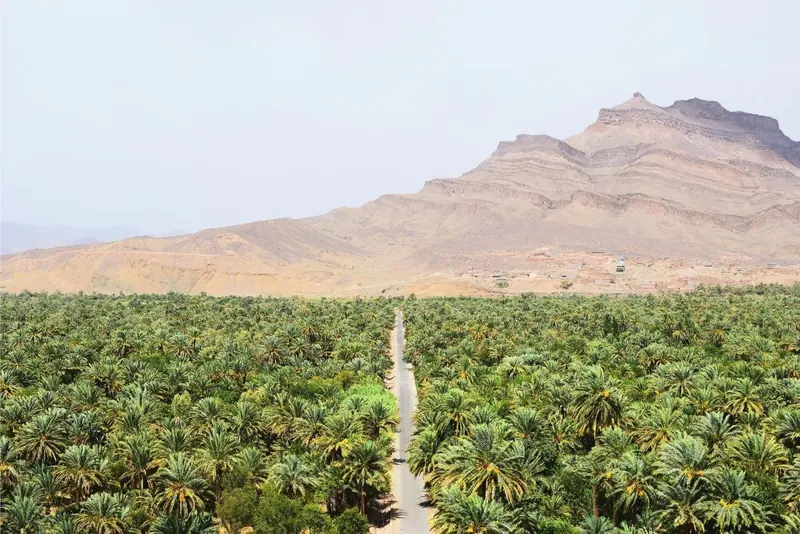
Life along the river
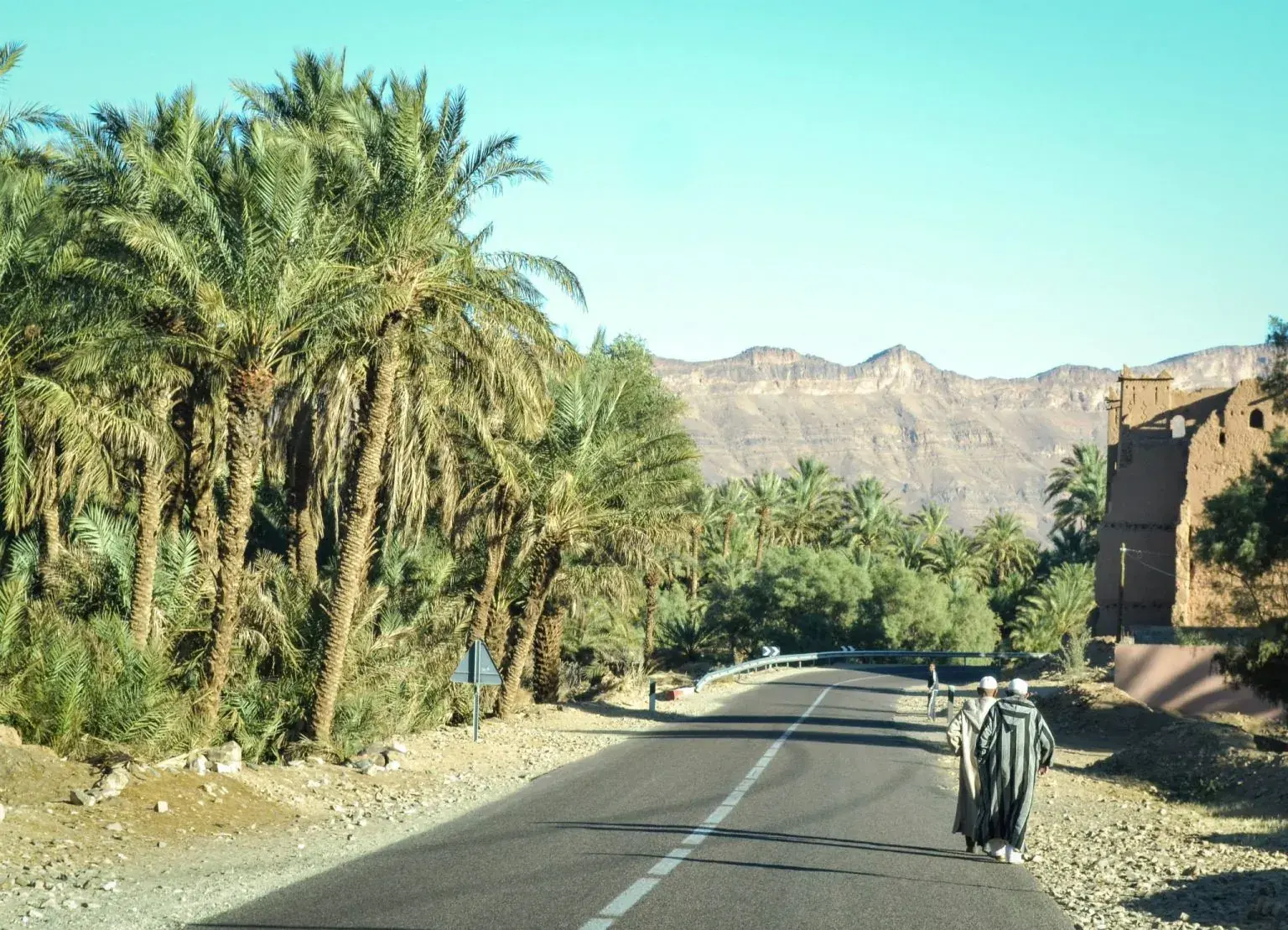
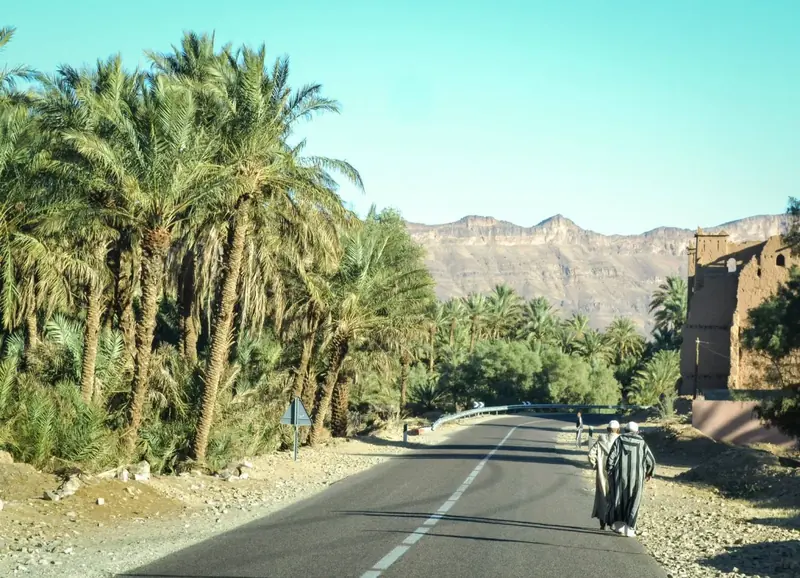
The water of the Draa irrigates palm groves, oases and small farms all along the river. The people of the valley are called Drawa. Outside the region the name mainly refers to the dark skinned people of the Draa, who make up the largest part of its population. Approximately 225,000 people live in the Draa Valley. The valley corresponds to the province of Zagora, which includes 23 villages and two towns, Zagora and Agdz.
Six great oases
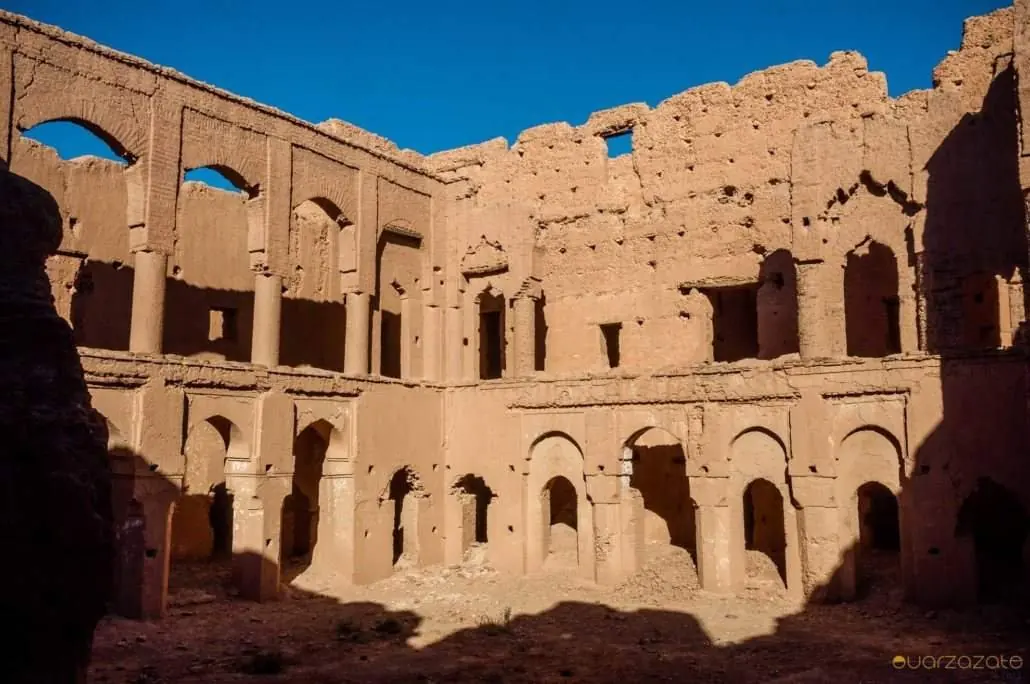
The Upper Draa valley stretches for about 200 kilometres and is made up of six major oasis stretches, each with its own palm groves. From north to south, the river leads past mud brick villages and kasbahs toward the edge of the Sahara, with Agdz at the start of the Mezguita oasis and Mhamid at the far end.
- Mezguita Oasis
- Tinzouline Oasis
- Temata Oasis
- Fezouata Oasis
- Ktaoua Oasis
- Mhamid Oasis
Tamegroute and touring the valley
Near the river, the village of Tamegroute is home to the renowned Zaouia Naciria, one of the largest zaouias in Morocco, and is known for its distinctive green pottery. The Quad Ouarzazate Zagora and Draa Valley day trip follows the palm groves through Agdz and Tamnougalt to Zagora and Tamegroute. For a night in the dunes, the desert tours to Mhamid and Erg Chigaga travel the full length of the valley. Routes and opening days can change, so check locally before you travel.
More destinations
All destinations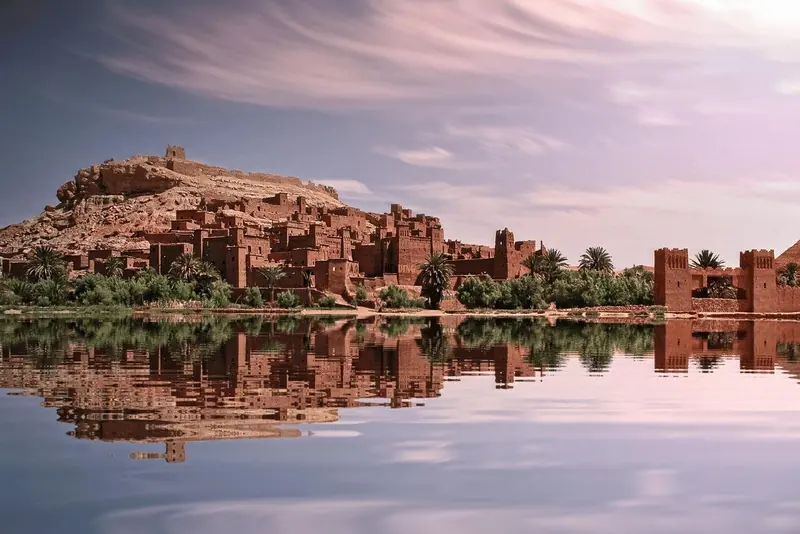
Ait Ben Haddou
A seventeenth century fortified village of ochre earth above the Ounila Valley, listed by UNESCO since 1987 and once a hub of Saharan caravan trade.
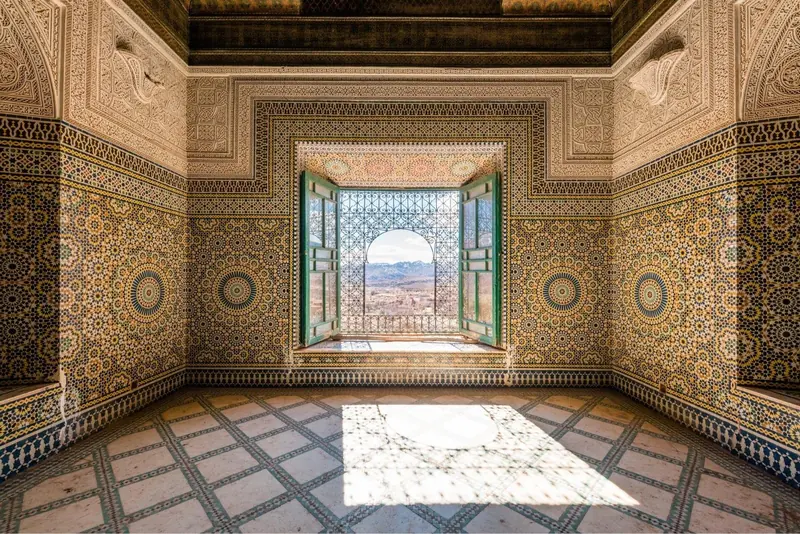
Telouet Kasbah
Built in 1860 and owned by the Glaoui family, Telouet hides painted cedar ceilings and Andalusian decoration behind weathered earthen walls.
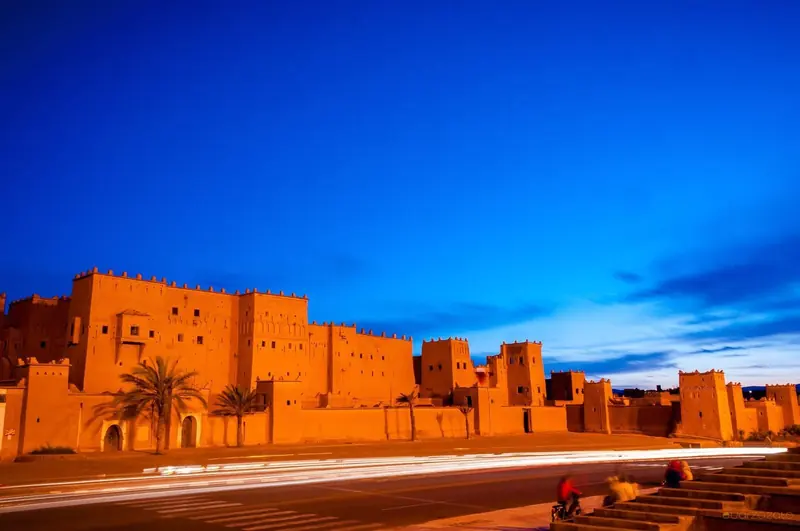
Taourirt Kasbah
The landmark kasbah of central Ouarzazate, a former Glaoui residence with Amazigh patterns outside and carved cedar, paintings and zellige within.