
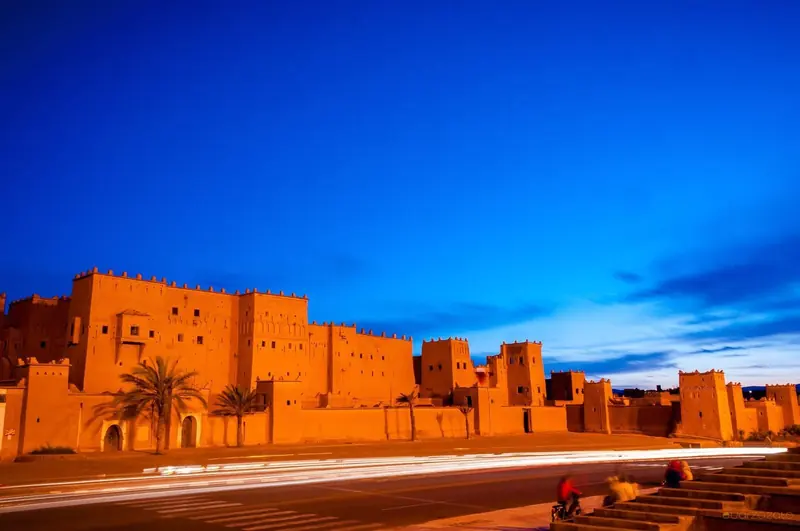
A ksar turned into a residence
Taourirt was built in the seventeenth century. Thami el Glaoui, the Pasha of Marrakech and a major landowner, transformed part of the ksar into a splendid kasbah where his family lived until Morocco gained independence in 1956. Standing in the centre of Ouarzazate, it has been carefully looked after, and most of the building was restored in the 1980s.
The exterior walls carry geometric Amazigh patterns, while the interior reveals the richness Glaoui brought to it: carved and painted cedar plank ceilings, wall paintings and zellige. Keep in mind that the area open to visitors is only a small part of the whole kasbah, and that outside its ksar context it may feel less dramatic than others on the 1000 Kasbahs route.
The Glaoui story
Taourirt once came under the caids of Tamnougalt, before authority shifted to Telouet in 1874. Hammadi Glaoui expanded and restructured the kasbah in 1882 and, after marrying into the local ruling family, governed Taourirt until his death in 1937. In 1940 Mohamed El Mahdi ben Hammadi took over and governed until independence.
Thami Glaoui, known as the Lord of the Atlas, counted the kasbah among his main residences. During the French occupation the family controlled much of southeastern Morocco. As Pasha of Marrakech he sided with the French against Sultan Mohamed V, was declared a traitor and lost his power after independence.
Ahwach and visiting tips
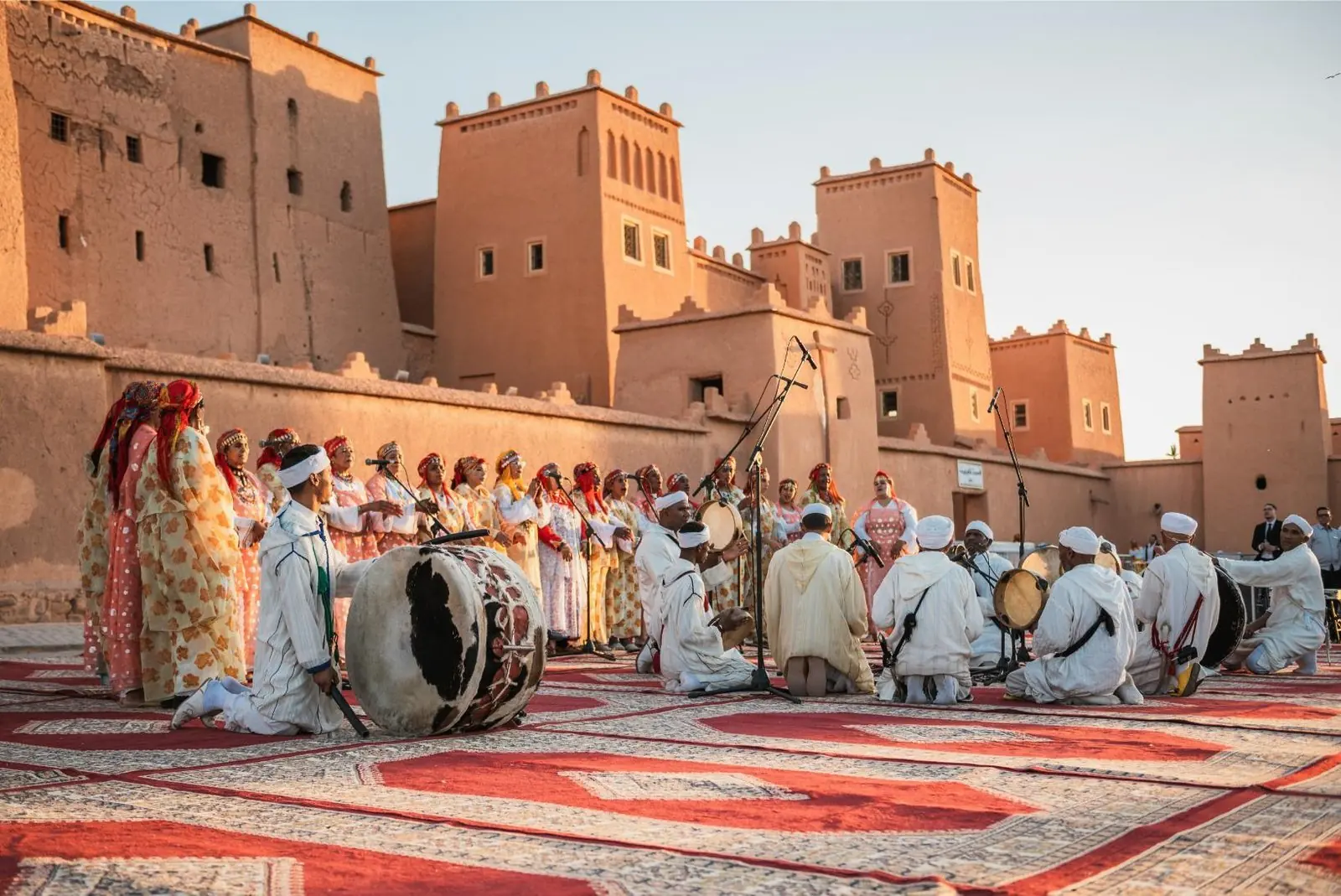
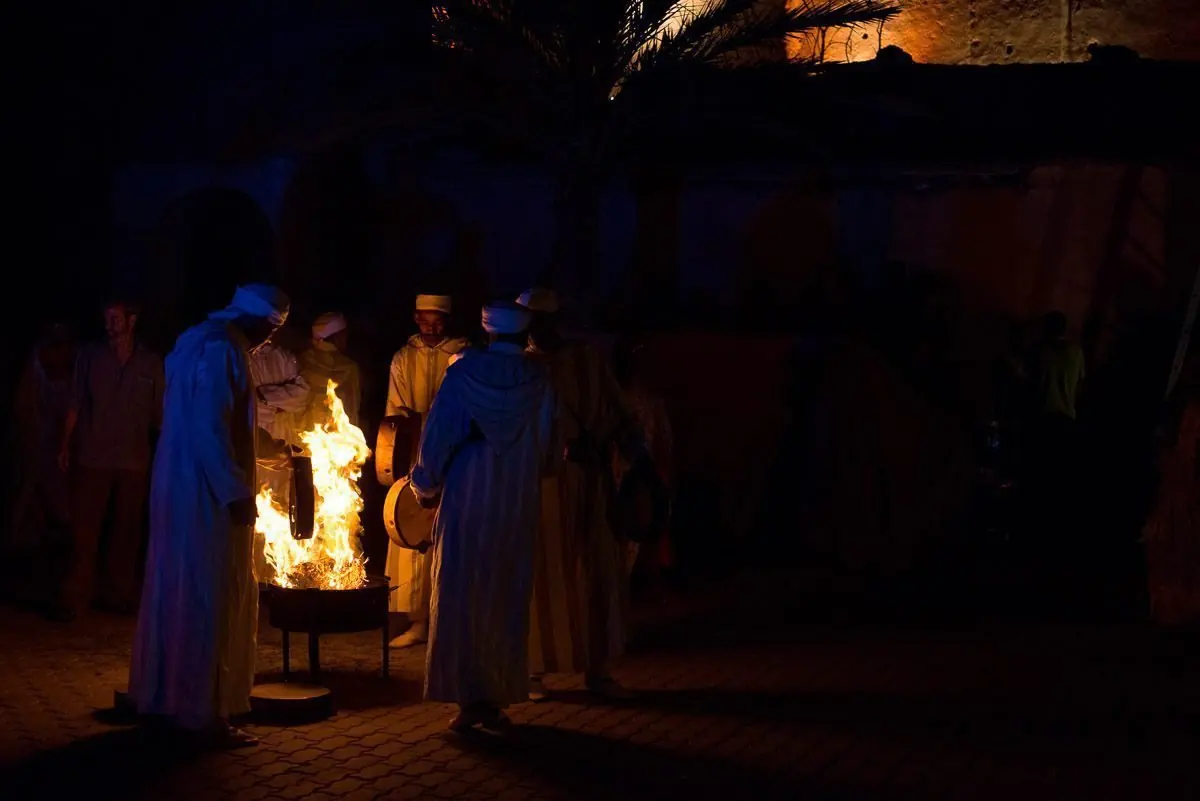
The Ahwach is a prominent folk dance of the region, and Ouarzazate hosts an annual Ahwach festival featuring traditional Moroccan dances. With some luck you may catch the Telouet Ahwach group performing inside the kasbah. The Cinema Museum stands just across the boulevard, so the two visits combine easily. Hours and fees can change, so check them locally before your visit.
More destinations
All destinations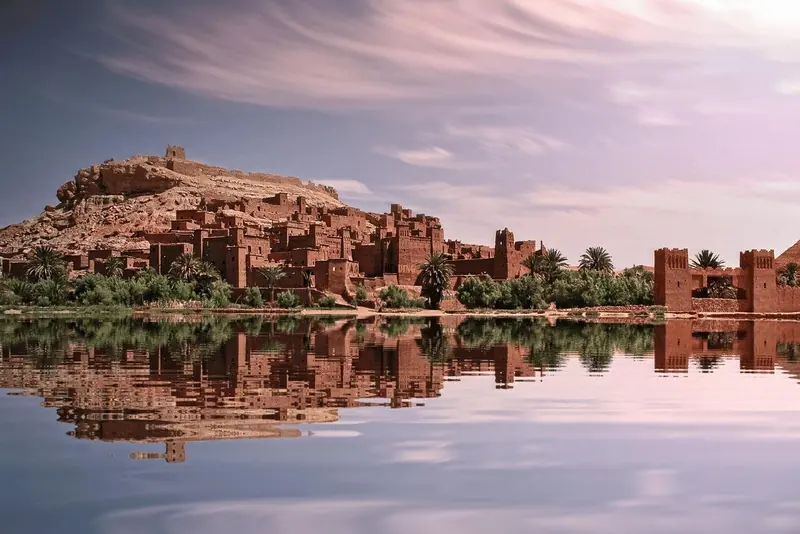
Ait Ben Haddou
A seventeenth century fortified village of ochre earth above the Ounila Valley, listed by UNESCO since 1987 and once a hub of Saharan caravan trade.
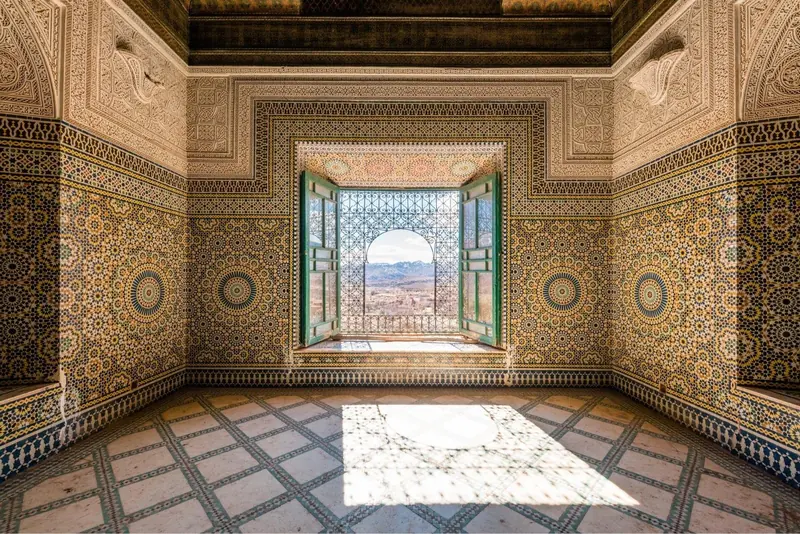
Telouet Kasbah
Built in 1860 and owned by the Glaoui family, Telouet hides painted cedar ceilings and Andalusian decoration behind weathered earthen walls.
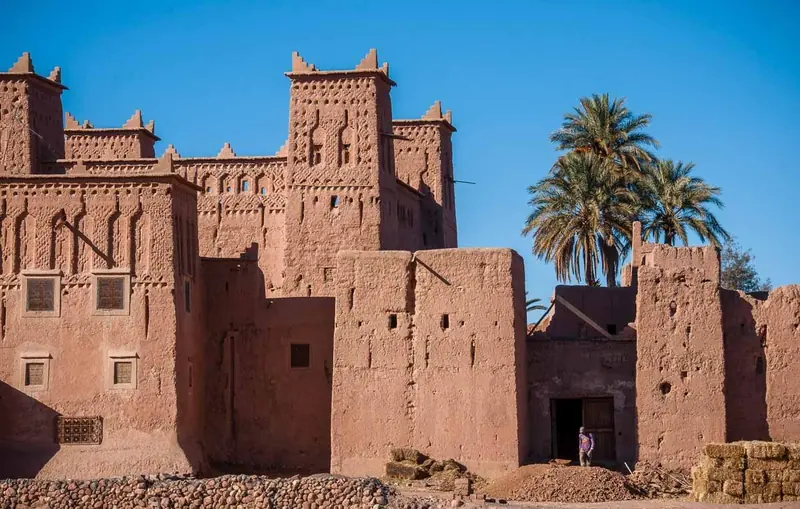
Amridil Kasbah
A well preserved seventeenth century kasbah at the edge of the Skoura oasis, still run by the descendants of its builder and once pictured on the 50 dirham note.